


Emergency Blood & Platelet Shortage: Patients are counting on donors now. All blood types are needed, especially O Positive, O Negative, and platelet donations. Donate Today
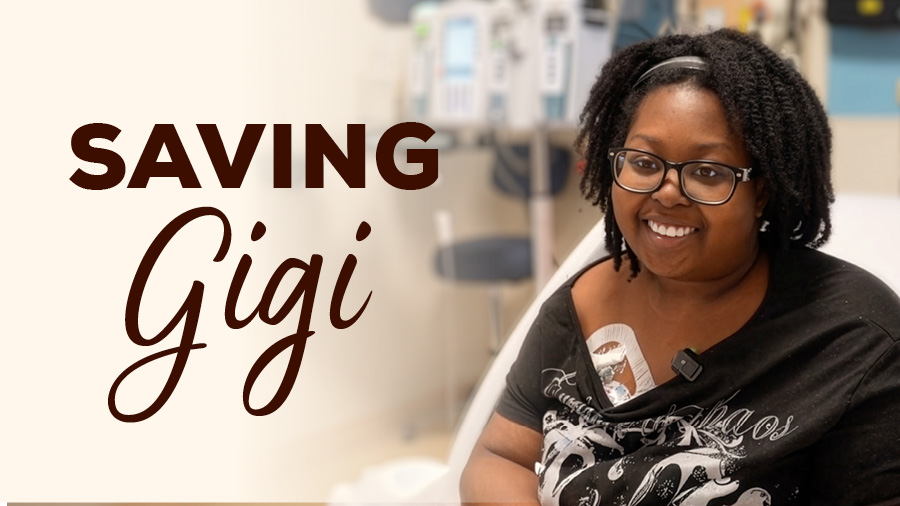
Are You a Match for Gigi?
A race against time is underway to save the life of 18-year-old Gigi. She is battling an aggressive form of sickle cell disease, an inherited blood disorder. Gigi has very rare blood and only African Americans and people of African descent will be a match for her.
To be a match for Gigi, donors need to be blood type O Negative and have the same antigen profile as Gigi, otherwise her body will reject the blood. Only people of the same ethnicity as Gigi are likely to have the same antigen profile as her. OneBlood is leading a search to locate donors who could be a match for Gigi. Gigi is in desperate need of a lifesaving bone marrow transplant. Doctors will not move forward with the transplant until 50 units of compatible blood are secured for Gigi.
You must meet the following criteria to be a potential match for Gigi
MUST be African American, or of African descent.
MUST be blood type O Negative
If a potential donor does not know their blood type, but is African American or of African descent they are strongly encouraged to donate blood. OneBlood will determine their blood type during testing and will also determine if their antigen profile matches Gigi.
Donate for Gigi
If you live in the OneBlood service area and would like to donate for Gigi, click here to find a OneBlood donation location.
If you want to host a blood drive for Gigi please click here.
OneBlood is urging the African American community and people of African descent to please donate for Gigi as soon as possible.
Gigi's Story
Time is of the essence to find compatible blood for Gigi. “I’m just asking you to help me, because I really do need it. It would mean a lot to me,” said Gigi.
“If you are a blood donor that matches Gigi, you are part of saving her life. It is that simple,” said Brian Cauff, MD, Chief of Pediatric Hematology and Oncology at Joe DiMaggio Children’s Hospital.
Gigi has spent much of her life in and out of the hospital, enduring constant pain and complications from sickle cell disease, an inherited blood disorder. Her survival now depends on securing 50 units of very rare blood from very specific donors before doctors can proceed with the transplant. Gigi says the transplant is her only chance. “To me it just seems like my last golden ticket,” she said.
What Are Antigens?
The challenge in finding compatible blood for Gigi comes down to antigens. Antigens are found on the surface of red blood cells. Genetics determine the antigens a person has and the antigens they lack.
For a person to be a match for Gigi, they not only need to be the same blood type, they need to have the same antigen profile, otherwise, her body will reject the blood. The antigen combination Gigi has will only be found within a certain ethnic group.
In Gigi’s case, the required antigen profile is primarily found in individuals of African descent. “Essentially every suitable donor for Gigi is going to be of African descent. We need the African American and Afro-Caribbean community to step up to help save Gigi’s life,” said David Crawford, MD, Pediatric Hematology and Oncology, at Holtz Children’s Hospital at UHealth Jackson Children’s Care.
Statistically, only 1 in 1,000 individuals of African descent will be a blood match for Gigi.
Gigi says the transplant is her only chance. “To me it just seems like my last golden ticket,” she said.
Around-the-Clock Search Underway
“It’s like looking for a needle in a haystack,” said Nancy Benitez, OneBlood Vice President of Immunohematology Reference Laboratories. OneBlood’s reference laboratory is leading an intensive, around-the-clock effort to identify compatible donors for Gigi.
“We have tasked OneBlood with a herculean task. It’s going to take an incredible effort,” said Dr. Cauff.
Donations from individuals of African ancestry are being carefully tested to find matches. “What we are doing at OneBlood in the reference laboratory is humongous,” said Benitez. “We are testing donations 24/7. Our goal is to find those 50 rare units of blood for Gigi.”
Some compatible units have already been identified and reserved exclusively for Gigi, but more are still urgently needed.
Doctors emphasize that time is critical. Without securing all 50 units the transplant cannot proceed. “The risks of going into a transplant without enough blood are too high,” said Dr. Cauff. “Without that transplant, she will continue to have life-threatening complications and I fear, life-ending complications.”
What Makes Gigi’s Blood Rare?
Gigi has had countless blood transfusions throughout her life. The number of transfusions she has had is what’s making finding compatible blood for her so challenging.
When a person has had many blood transfusions, they create antibodies and those antibodies make it difficult to find compatible blood. Gigi has so many different antibodies to red blood cells that most blood is not compatible with her.
Why is Blood Needed for the Transplant?
When Gigi goes through the bone marrow transplant, she will need blood transfusions until her body can start making red blood cells again. Doctors are concerned she could have transfusion complications during the transplant and that is why an extraordinary amount of specially matched blood must be on-hand before proceeding with the transplant. The risks of her going into a transplant without enough blood are too high.
A Chance for a Cure
Gigi’s brother is a perfect match for Gigi’s bone marrow transplant. A successful bone marrow transplant will give Gigi a chance at a life free of the debilitating and life-threatening complications of sickle cell disease. Almost every patient that gets a transplant for sickle cell is cured of the disease.
Sickle Cell Disease and the Need for a Diverse Blood Supply
Sickle cell disease is an inherited blood disorder that primarily affects the African American community and people of African ancestry. Many sickle cell patients require frequent blood transfusions throughout their lives. To avoid transfusion complications the best blood match for sickle cell patients is for them to receive blood from donors of the same ethnicity. Unfortunately, less than 4% of American Americans donate blood and that reality makes it challenging to find compatible blood for sickle cell patients